How Fixture Congestion Reshapes Squad Rotation for Arsenal and Chelsea in Autumn 2026
Written by Riley Griffin · Aug 18, 2026
How Fixture Congestion Reshapes Squad Rotation for Arsenal and Chelsea in Autumn 2026
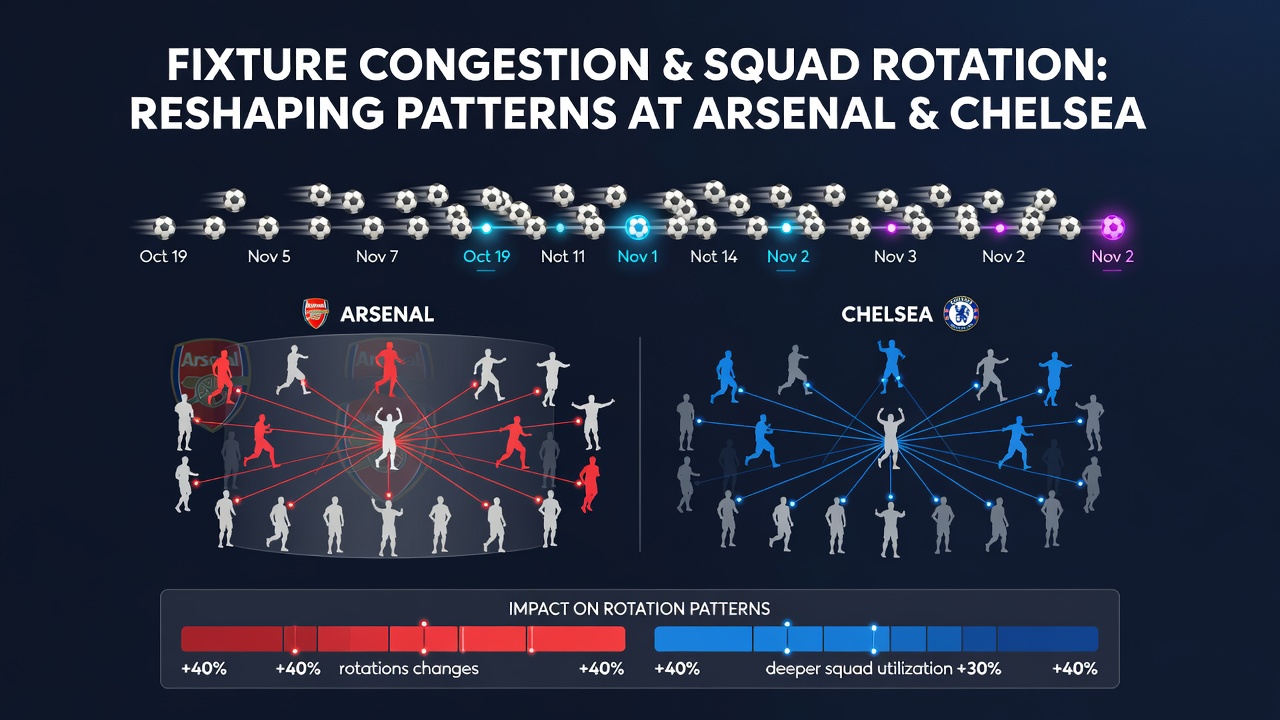
Fixture congestion hits Premier League clubs hard during autumn months when domestic leagues overlap with European competitions and domestic cups, forcing managers at Arsenal and Chelsea to adjust rotation patterns based on player workload data collected across previous seasons. Research from the UEFA medical committee shows that teams averaging more than two matches per week experience measurable increases in muscle fatigue markers, which in turn influences how coaches select starting lineups and manage substitutes.
Patterns of Congestion in the 2026 Calendar
August 2026 marks the start of a compressed period where both Arsenal and Chelsea face early league fixtures alongside qualifying rounds or group stage matches in the Champions League, and the Carabao Cup often adds an extra midweek game that stretches squad resources. Data indicates clubs in European competition play up to 18 matches between September and November, compared with 12 for those without continental involvement, creating clear differences in rotation demands.
Coaches track metrics such as total distance covered, high-intensity efforts, and recovery time between games, with sports science teams using GPS and heart-rate monitors to decide when to rest key players. One study published in the Journal of Sports Sciences found that midfielders and full-backs accumulate the highest cumulative loads during such periods, prompting managers to rotate these positions more frequently than central defenders or goalkeepers.
Arsenal's Approach to Rotation
Arsenal's technical staff have historically relied on a core group of 16 to 18 players who receive regular minutes, yet fixture piles force the inclusion of academy graduates or squad players who might otherwise feature only in cup ties. Observers note that Mikel Arteta's side often deploys a 4-3-3 shape in the first of three matches within eight days, then switches to a more compact 4-4-2 or 3-5-2 when fatigue data signals reduced pressing intensity from the same personnel.
Figures from the Premier League's official performance database reveal Arsenal rotated at least five outfield players in 62 percent of matches during autumn blocks in the 2024-25 and 2025-26 seasons, a pattern expected to continue into 2026 given the expanded European calendar. The club also schedules recovery sessions on non-match days that include cryotherapy and nutrition protocols tailored to individual recovery rates.
Chelsea's Rotation Adjustments
Chelsea, operating under a different ownership and recruitment model, maintains a larger squad depth that allows for more wholesale changes between fixtures. Records show the west London club used 22 different starting lineups across 14 autumn matches in the previous campaign, with Enzo Maresca's staff prioritizing tactical flexibility over continuity. This approach stems from data showing that players returning from international duty in September often require an extra 48 hours to regain match sharpness.
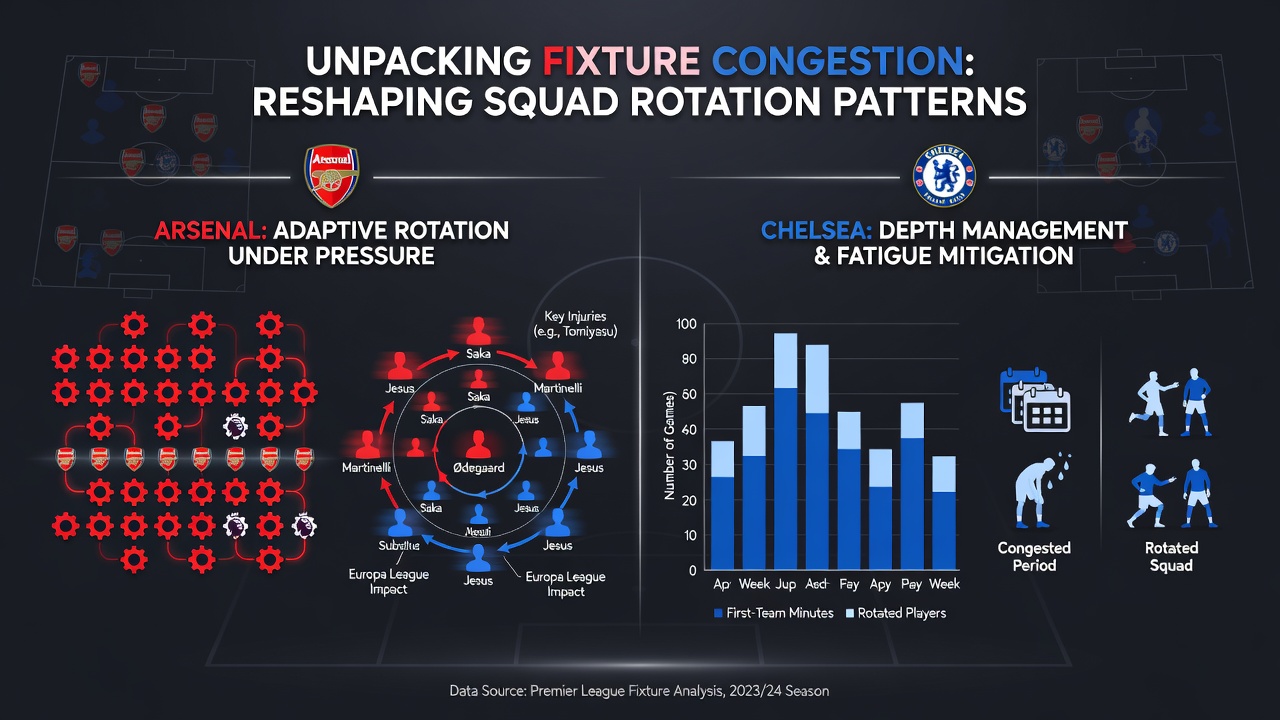
When Chelsea face back-to-back home and away games against strong opponents, the medical team flags players who have logged over 300 minutes in the prior 14 days for reduced roles. This results in opportunities for loanees or new signings to integrate gradually, while established starters receive targeted rest without dropping out of the matchday squad entirely.
Broader Effects on Team Performance and Injury Rates
Across the Premier League, clubs report a 15 to 20 percent rise in soft-tissue injuries during October and November compared with the opening month of the season, according to figures compiled by the Football Association's injury surveillance programme. Both Arsenal and Chelsea have responded by shortening training sessions on the day after European matches and increasing the use of individualised gym programmes that focus on eccentric loading to protect hamstring and quadriceps groups.
Rotation also influences set-piece organisation and attacking patterns because different combinations of players require repeated rehearsal time that congested schedules rarely provide. Teams that maintain consistent back-four pairings tend to concede fewer goals from open play, yet those same pairings become harder to preserve when multiple competitions demand attention.
Conclusion
Fixture congestion in autumn 2026 continues to drive measurable changes in how Arsenal and Chelsea structure their squads, with rotation decisions guided by workload metrics rather than intuition alone. The same data sets that highlight fatigue also help clubs reduce injury risk and maintain competitive performance across domestic and European fronts. As the calendar remains packed through November, the patterns established in August and September set the template for the remainder of the campaign.