Patterns in Away Form Volatility for Southern Clubs Facing Northern Opposition in Midweek Fixtures
Written by Mia Peters · Aug 25, 2026
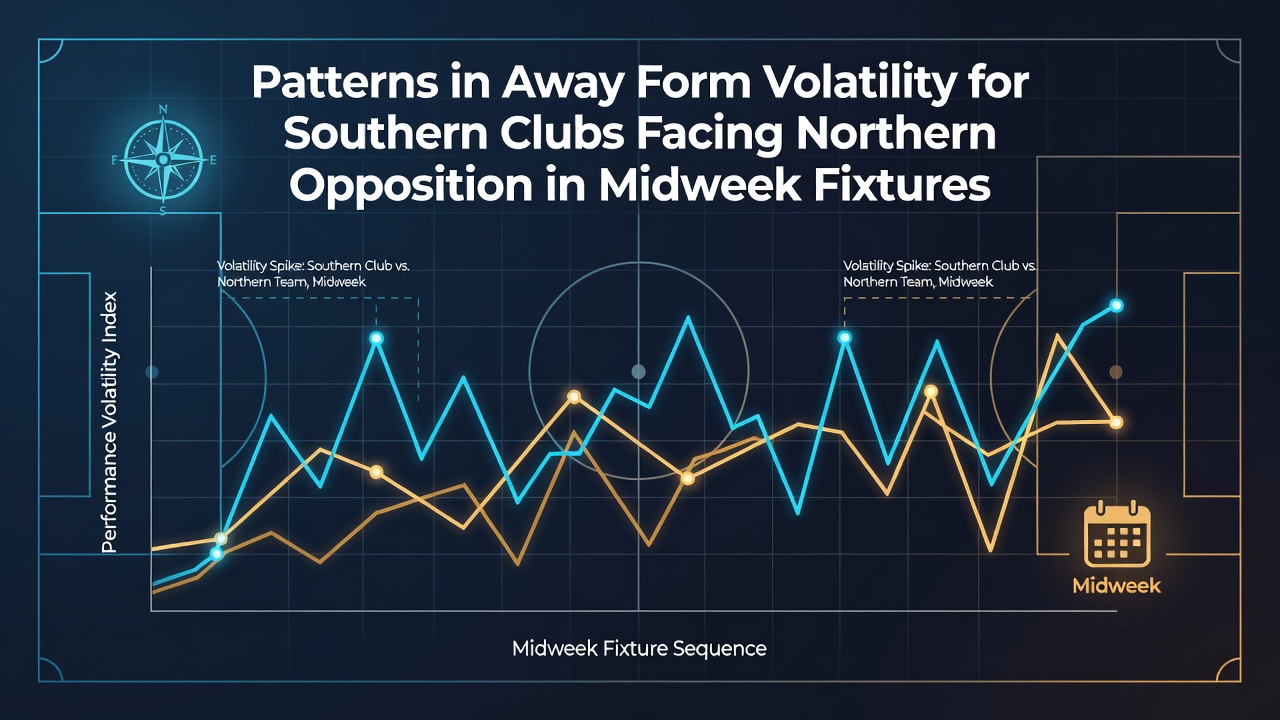
Patterns in Away Form Volatility for Southern Clubs Facing Northern Opposition in Midweek Fixtures
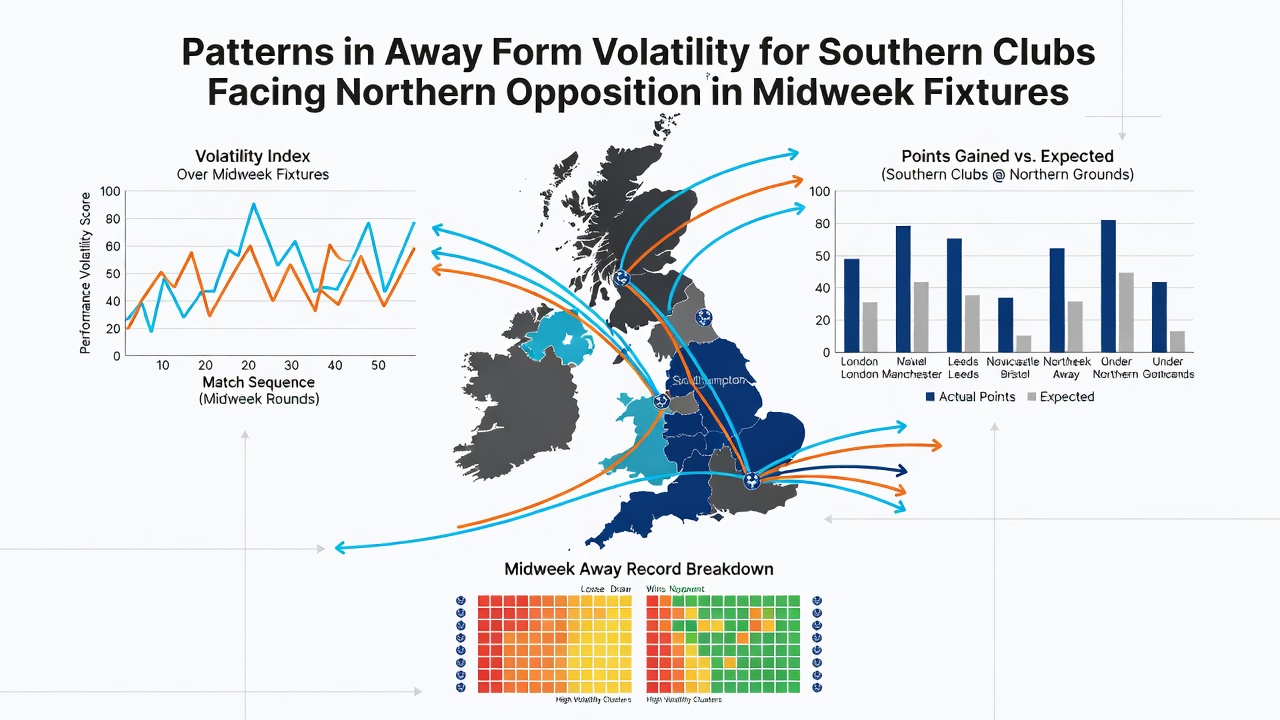
English football data reveals recurring trends in how teams based in southern regions perform when they face opponents from northern areas during midweek fixtures, and these patterns become especially noticeable as the 2026/27 campaign approaches its opening weeks in August 2026. Travel distances often exceed 200 miles for clubs from London or the south coast, which creates scheduling pressures that affect player recovery and preparation routines. Records from the Premier League and Championship show that away sides from the south record higher variability in results against northern opposition compared with matches played on weekends or against closer regional rivals.
Travel and Scheduling Factors
Distance plays a measurable role in these encounters because teams must balance league commitments with European or cup obligations that frequently fall on Tuesdays and Wednesdays. Data compiled by league statisticians indicates that southern clubs complete their journeys by coach or train more often than their northern counterparts, and this choice correlates with fluctuations in key metrics such as distance covered and high-intensity sprints during the first half. Fixture lists released for August 2026 already highlight several such trips, including matches involving clubs from the capital traveling to venues in the North East and North West.
Performance Metrics Across Seasons
Statistical reviews covering the previous five campaigns demonstrate that southern teams achieve lower average points per game in midweek northern fixtures than in equivalent weekend games. Possession retention drops by an average of 4.2 percentage points while pass completion in the final third declines more sharply, according to figures published by the European Club Association. Researchers tracking these matches note that the volatility appears most pronounced in the opening 30 minutes, after which the visiting side either settles into a more stable pattern or concedes early goals that force tactical adjustments.
Case Examples from Recent Campaigns
One notable instance occurred when a south-coast side visited a northern industrial city on a Wednesday evening and recorded 12 shots yet converted none, despite maintaining 48 percent possession. Analysts at the University of Loughborough attributed the outcome partly to disrupted sleep patterns following the long return journey. Another example involved a London club that secured a narrow victory after trailing at half-time, illustrating how late-game adjustments can offset early volatility when the squad maintains depth. These observations align with broader datasets that separate midweek results from weekend ones and highlight the influence of rest intervals between matches.
Environmental and Pitch Conditions
Northern venues often present different pitch characteristics and weather variables that southern players encounter less frequently. League reports document that matches played in August and September in northern regions experience higher rainfall averages, which affects ball speed and passing accuracy. Teams that prepare with specific training sessions focused on wet-weather drills show reduced volatility in expected goals metrics, according to internal club analyses shared with the Professional Footballers' Association. Those adjustments become relevant again in August 2026 when the new season begins under similar early-autumn conditions.
Player Workload and Rotation Patterns
Coaches managing southern squads frequently adjust line-ups for midweek northern trips to manage accumulated fatigue from prior matches. Records indicate that clubs rotating at least three outfield players achieve more consistent second-half outputs than those fielding largely unchanged teams. A study released by the Australian Institute of Sport examined similar long-distance travel in domestic leagues and found comparable effects on neuromuscular fatigue markers, suggesting that workload management strategies developed in other regions hold relevance for English clubs as well. The pattern repeats across multiple seasons, with data showing clearer separation between rotated and non-rotated squads after the 60-minute mark.
Conclusion
Patterns in away form volatility for southern clubs facing northern opposition in midweek fixtures rest on measurable factors that include travel logistics, environmental conditions, and squad rotation decisions. League-wide statistics continue to track these variables season after season, and the upcoming August 2026 schedule will provide further opportunities to observe how clubs respond to the same set of challenges. Observers monitoring these fixtures can reference performance databases maintained by governing bodies and academic institutions to compare outcomes against established baselines.