Tracing Shifts in Market Movements Following Late Team News Announcements in Premier League Weekends
Written by Carlo Krüger · Sep 8, 2026
Tracing Shifts in Market Movements Following Late Team News Announcements in Premier League Weekends
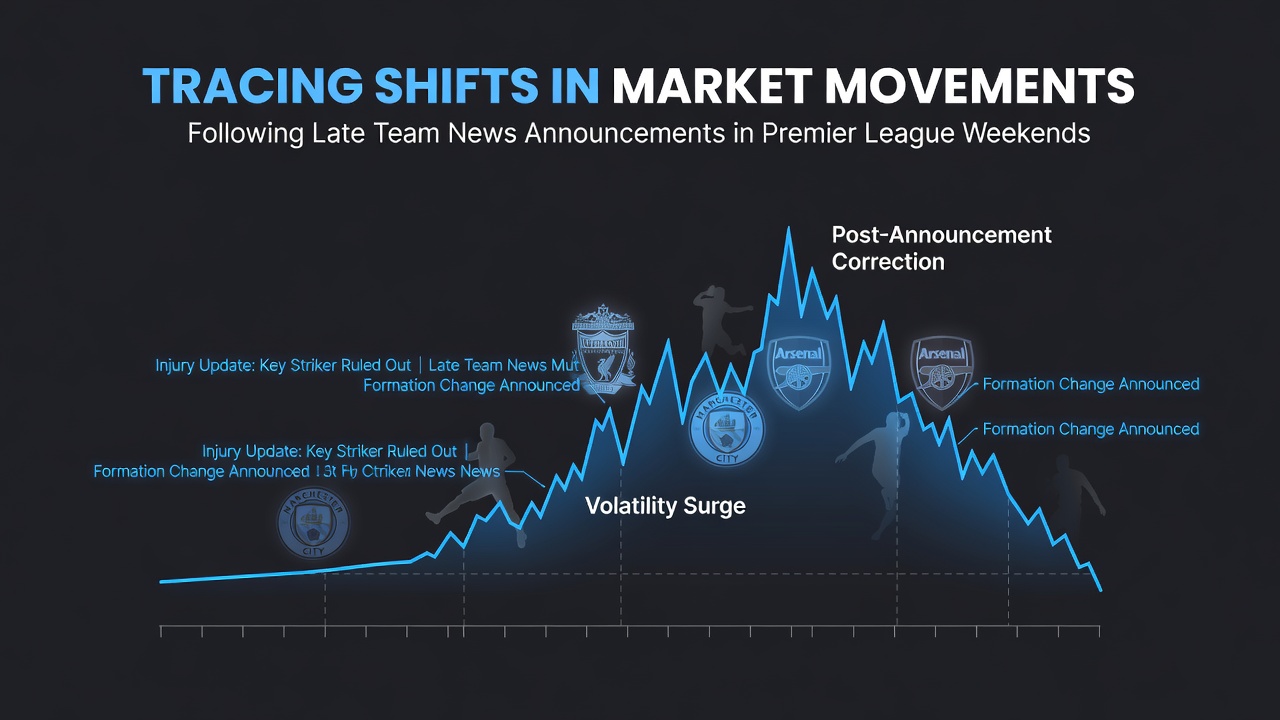
Premier League weekends often see betting markets adjust rapidly when team news emerges in the hours before kickoff, and observers track these changes through odds fluctuations across multiple bookmakers. Late announcements about starting lineups, injuries, or tactical shifts create immediate ripples because markets price in expected outcomes based on earlier information, yet new details alter probabilities for goals, corners, and player performance metrics. Data from recent seasons shows that such updates frequently occur between Friday evening and Saturday morning, leaving little time for bettors to react before lines tighten or widen depending on the news.
How Late Announcements Reach Markets
Press conferences and official club channels release information in staggered waves, while social media accounts sometimes leak details hours ahead of formal confirmations, and analysts monitor these sources to quantify their effect on implied probabilities. When a key striker is ruled out on Saturday morning, for instance, goal-scoring markets shift as totals drop and opposing defenses gain implied value, with trading volumes spiking on exchanges where liquidity allows rapid repricing. Studies of historical fixtures reveal that announcements after 10 a.m. on match day produce larger movements than those released the previous evening, because fewer participants have time to adjust positions before the markets stabilize.
Patterns Observed Across Multiple Seasons
Records from the 2024-2025 campaign demonstrate that defensive injury news tends to compress over-2.5-goals lines more noticeably than attacking absences, since clean-sheet odds respond directly to changes in expected shots on target. Midfield suspensions, by contrast, often widen both-teams-to-score markets when they disrupt build-up play and increase direct transitions. In September 2026, several fixtures illustrated these dynamics when late fitness updates altered expected goal models by 0.3 to 0.5 goals per game, prompting exchanges to recalibrate within minutes of each disclosure.
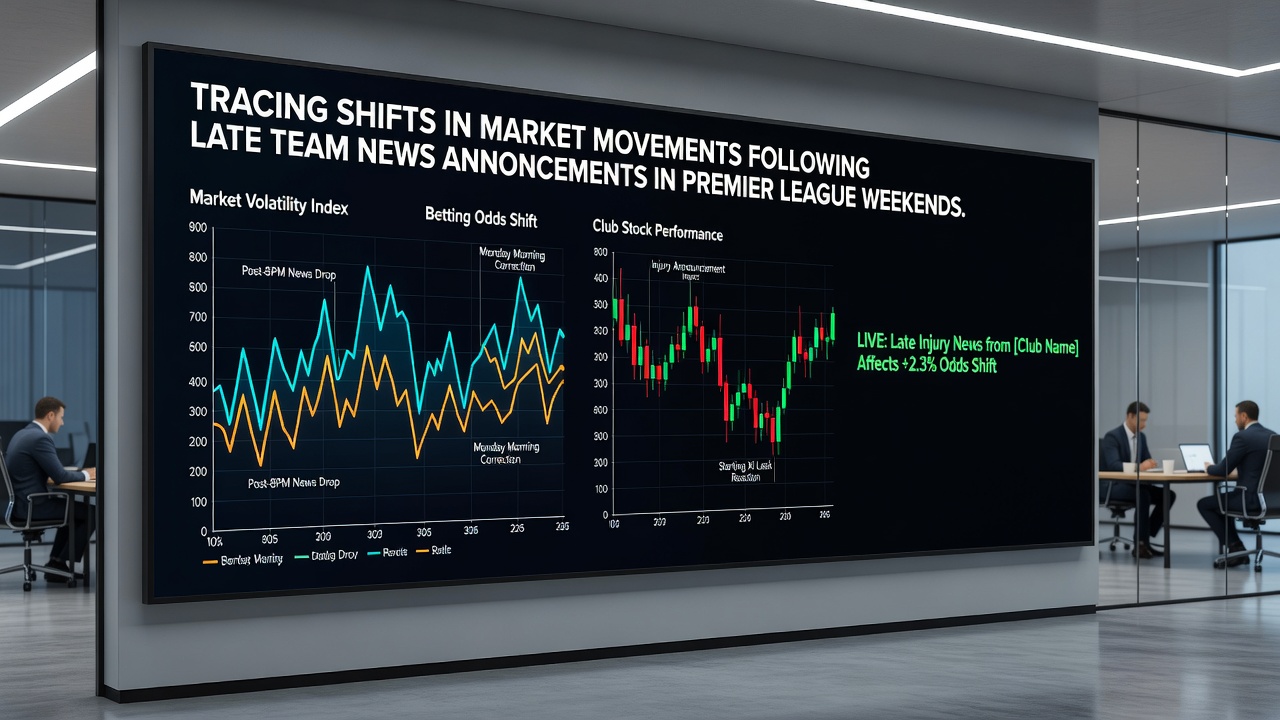
Researchers who examined timestamped odds data across five bookmakers found that the average movement in Asian handicap lines reached 0.25 goals following confirmed absences, whereas player props such as shots on target moved even faster because they depend on individual availability. And those same datasets indicate that volatility peaks between 11 a.m. and 1 p.m. on Saturdays, after which markets settle until the final pre-match wave of information arrives.
Regional Variations in Market Response
European betting operators, including those regulated under the Malta Gaming Authority, display slightly slower adjustments than their Australian counterparts licensed by the Northern Territory Racing Commission, yet both groups converge on similar final prices once official lineups are published. Academic work from the University of Sydney's sports analytics group has documented how these timing differences create brief arbitrage windows for traders who monitor multiple jurisdictions simultaneously. The patterns hold across home and away fixtures, although away-team news tends to generate larger swings because markets assign higher uncertainty to traveling squads.
Implications for Data Providers and Traders
Specialist data firms now timestamp every official announcement and cross-reference it against odds feeds to produce real-time impact scores, and these scores help professional syndicates decide whether to enter or exit positions. When a goalkeeper is confirmed unavailable shortly before kickoff, both-to-score and clean-sheet lines can shift by several percentage points within a single minute, creating measurable edges for those equipped with automated alerts. Observers note that September 2026 fixtures produced above-average movement sizes because fixture congestion increased the frequency of last-minute changes to rotation policies.
Conclusion
Market movements following late team news continue to reflect the speed and accuracy of information flow, with data providers, regulators, and traders all monitoring the same announcements for different purposes. Patterns established across multiple seasons show consistent directional responses to specific types of updates, and these responses remain measurable even as technology shortens the interval between disclosure and repricing. Future weekends will likely maintain the same structure, since the underlying mechanics of lineup confirmation and odds adjustment have not changed.